

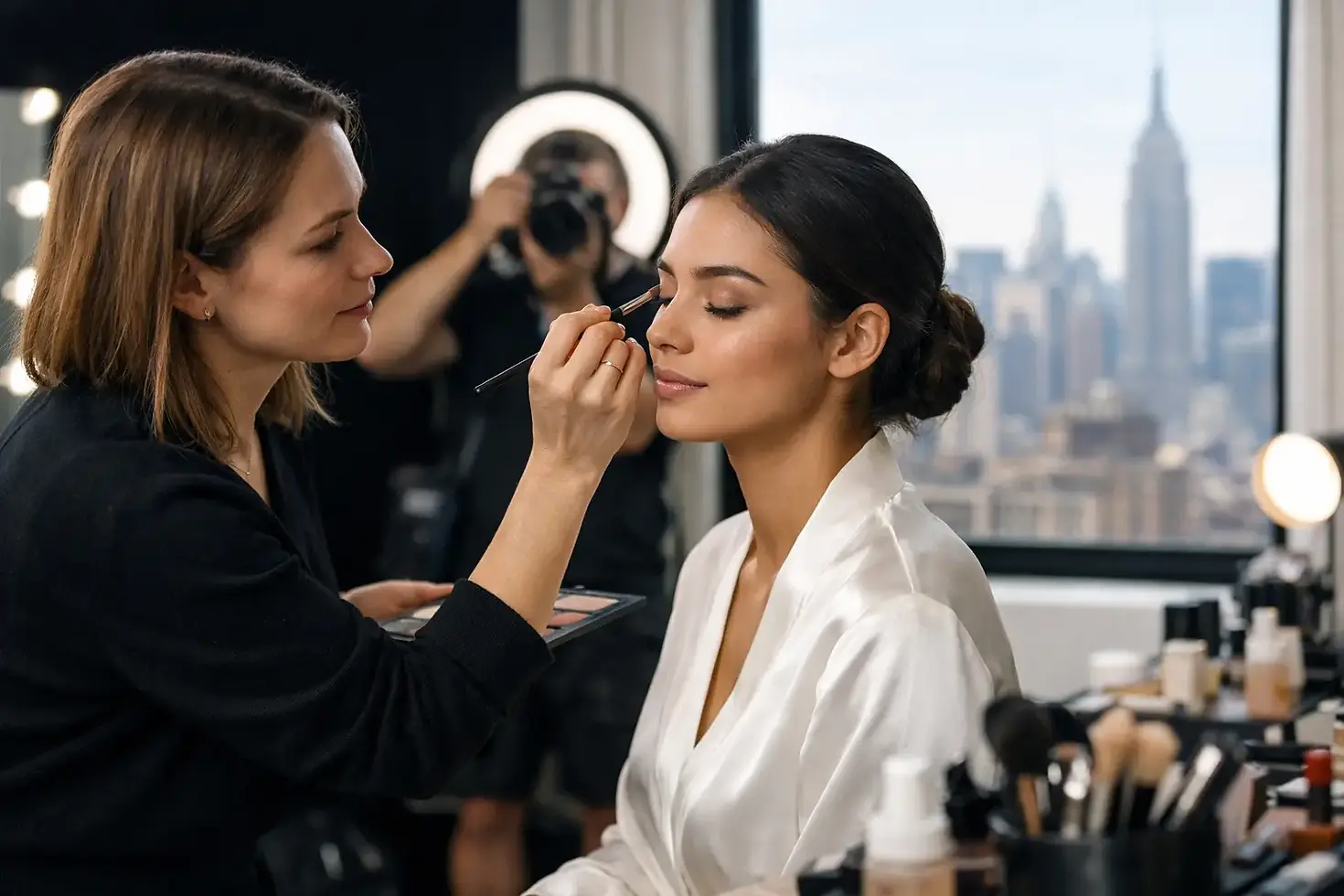
Choosing a Makeup Artist for Photoshoot in NYC

A makeup artist for photoshoot work does more than apply a beautiful face of makeup. The right artist considers lighting, camera distance, wardrobe, skin texture, and the feeling you want the final images to carry. Whether you are planning engagement portraits, personal branding images, an editorial shoot, or content for your business, your makeup should look refined on camera while still feeling like you in person.
In New York City, photoshoots often move quickly. You may be working in a Brooklyn studio, a sunlit apartment, outdoors, or on location with a full creative team. Choosing an artist who understands both makeup and the pace of a shoot helps you arrive prepared, comfortable, and ready for every frame.
Why Photoshoot Makeup Is Different
Makeup for photography needs intention. Studio lights and flash can soften dimension, while daylight can reveal every detail of texture and blending. A look that appears perfect in a bathroom mirror may read flat, overly shiny, or unfinished in professional photos.
A skilled artist creates balanced coverage rather than a heavy mask. Complexion products are selected and layered with your skin type in mind, then set carefully so the finish stays fresh through multiple outfit changes. Contour, blush, brows, and eye definition are adjusted for the camera, not simply applied according to a trend.
That does not mean every photoshoot requires full glam. For a clean beauty campaign or a professional headshot, soft skin, groomed brows, subtle lashes, and a natural lip may be exactly right. For editorial fashion images or dramatic evening portraits, a stronger eye, sculpted complexion, or statement lip can bring needed presence. The best choice depends on the concept, lighting, and how you want to recognize yourself in the images years from now.
How to Choose a Makeup Artist for Photoshoot
Start with the artist’s portfolio, but look beyond a single dramatic image. Look for clear skin work, thoughtful color choices, and makeup that photographs well across different skin tones, face shapes, and lighting conditions. A polished portfolio should show consistency: natural makeup looks like elevated skin, soft glam has dimension without appearing muddy, and full glam is precise rather than overdone.
It also helps to choose an artist whose signature style aligns with your vision. If you want luminous, wearable beauty, an artist known only for bold, high-contrast looks may not be the best fit. On the other hand, if the shoot calls for a defined, editorial finish, someone who specializes solely in minimal makeup may not deliver enough impact for the camera.
Before booking, share the practical details. Let the artist know the shoot date, call time, location, photographer’s style, expected lighting, number of looks, and whether hair styling is happening at the same appointment. These details affect timing and product choices. A sunrise outdoor shoot and a flash-heavy indoor campaign may need very different approaches.
Ask whether touch-ups are needed. A single headshot session may only require makeup application before the camera starts. A longer shoot with multiple wardrobe changes, summer heat, or close-up beauty images can benefit from having the artist stay on set. This is especially valuable when the look includes bold lips, glossy skin, or detailed eye makeup that needs to remain immaculate.
Bring a Clear Visual Direction
Reference images are helpful when they communicate a mood rather than ask for an exact copy. Save a few images that show the complexion finish, eye shape, lip color family, and overall level of glam you love. Include a photo of yourself on a day when you felt especially confident, too. It gives your artist a more realistic sense of your personal style.
Your wardrobe matters just as much as your inspiration photos. A crisp white shirt, a satin gown, a colorful suit, and a black turtleneck all reflect light differently and call for different makeup balance. Share outfit photos in advance if possible. An experienced artist can recommend whether your makeup should lean warmer, softer, more sculpted, or more defined.
Be honest about what you do not like. If you avoid heavy foundation, do not wear false lashes, or feel unlike yourself in very dark brows, say so before the appointment begins. Good photoshoot makeup is collaborative. It should enhance your features and support the creative direction without making you feel costumed.
Prepare Your Skin Without Overdoing It
The most beautiful makeup begins with comfortable, well-prepped skin. In the days leading up to your shoot, keep your routine familiar. Hydrate, moisturize consistently, and avoid experimenting with strong exfoliants, new retinol products, or aggressive facials right before the appointment. A reaction or dry patch is harder to manage than skin that is simply a little imperfect.
On the day of the shoot, arrive with a clean face unless your artist gives you different instructions. Use your usual moisturizer, but avoid applying thick oils or rich products that can interfere with makeup wear. Bring your preferred lip balm, any skin products you use for sensitivity, and a photo of your outfit if you have not already sent one.
If you are getting spray tanned, schedule it with enough time for the color to settle. If you plan to shape brows, wax, tint, or thread them, do that a few days ahead rather than the morning of the shoot. Small timing decisions make a noticeable difference in how calm and polished you feel when it is time to sit in the makeup chair.
Plan Enough Time for the Appointment
Rushing is one of the easiest ways to compromise a beautiful makeup application. For most photoshoots, plan time for skin prep, makeup, final adjustments, and a quick review in the lighting closest to your shoot setup. If you are wearing a garment that goes over your head, put it on before makeup when possible, or choose a button-down top for the appointment.
Bring a small touch-up kit to set. Your artist can suggest the essentials, which often include lip color, blotting papers, powder, and a small brush or sponge. You do not need a full makeup bag. You need a few products that keep the finish intact between shots without changing the makeup the artist created.
For clients who want polished, modern makeup for a camera-facing moment, makeupnyc offers in-studio photoshoot glam designed around the look, lighting, and occasion. The goal is never to cover who you are. It is to make sure your features are seen clearly and beautifully on camera.
The Details That Make Makeup Photograph Well
Photography rewards balance. Skin should have enough coverage to look even, but enough life to avoid looking flat. Highlight should be placed with restraint, especially if flash is involved. Powder matters, but too much can create a dry finish in close-ups. The same thoughtful approach applies to lashes, brows, and lips.
A good artist also accounts for the way makeup changes over time. Foundation warms up, natural oils come through, and lipstick fades after coffee, conversation, or a quick meal between looks. Setting techniques and product choices should support your skin rather than fight it.
If your shoot includes close-up images, tell your artist early. Close-up beauty photography demands especially smooth transitions around the eyes, nose, and lips. If the final images will be mostly full length, the makeup may need slightly more definition so your features do not disappear from a distance.
The goal is not to look heavily made up in every image. It is to look intentional: rested, defined, confident, and fully present in the moment. When you choose an artist whose work feels aligned with your vision and give them the details they need, your makeup becomes one less thing to manage on shoot day - and one more reason to feel ready when the camera turns your way.


Comments