


Natural Makeup That Looks Like You, Refined
- makeev kh
- 4 hours ago
- 5 min read

A natural makeup look should not make you feel like you are wearing less makeup than you need. It should make you look rested, polished, and fully yourself - with skin that reads beautifully in person and features that hold their definition in photos. For a wedding morning in Brooklyn, an engagement session, or a party where everyone will have a camera out, that balance is the entire point.
Natural does not mean unfinished. It means every choice is intentional: a complexion that still looks like skin, softly shaped brows, eyes with quiet definition, and color placed where it brings warmth and life to the face. The result is elegant enough for a meaningful occasion without looking disconnected from how you normally see yourself.
What Natural Makeup Really Means
Natural makeup is often confused with bare skin, clear gloss, and nothing else. That can be beautiful, but professional natural makeup is more considered than that. It is a tailored approach to enhancement, not a fixed list of products.
The right amount of coverage depends on your skin, the event, the lighting, and how long you need the look to wear. Someone getting married outdoors in daylight may want a lightweight, even complexion with targeted concealer. Someone attending an evening event or stepping in front of a professional camera may need a little more foundation and strategic setting, while still keeping the finish fresh and believable.
The goal is not to erase every freckle, line, or dimension from the face. Skin has texture. When makeup is applied with a light hand and built only where needed, it looks more expensive, more current, and more like you.
Soft definition creates the difference
A natural look still needs structure. Brows are brushed and gently filled where they are sparse, rather than sharply outlined. Eyes may have a soft taupe, champagne, rose, or warm brown wash that brings out their shape without reading as a heavy eyeshadow look. A thin lash line definition, curled lashes, or a natural-looking lash can add depth that is especially helpful in photography.
Blush is another essential detail. A touch of cream or powder color placed thoughtfully gives the complexion movement and warmth, particularly when foundation has evened out natural redness. The best shade is not always the trendiest one. It is the shade that makes your face look awake and balanced.
Lips are typically kept close to your natural tone, but “nude” should never mean beige by default. The right nude might be rosy, peachy, caramel, mauve, or softly brown, depending on your coloring. A defined lip pencil and satin lipstick can look just as natural as balm, with much better staying power for an event.
Why Natural Makeup Needs Professional Technique
The most effortless-looking makeup is often the most technically demanding. Full glam announces itself through liner, contour, lashes, and color. Natural makeup has nowhere to hide. If the foundation is too dry, too warm, or too full coverage, it shows. If the brows are too dark or the concealer is too bright, the whole face can start to feel overdone.
Professional application begins with preparation. Hydration, smoothing, and complexion products must work together, not compete. Skin type matters here. Dry skin may need nourishing layers and a radiant base, while oily or combination skin often benefits from lightweight hydration, controlled powder placement, and long-wear formulas that do not flatten the complexion.
This is also why copying a look from a filtered photo rarely produces the same result. A makeup artist considers your skin tone, facial proportions, texture, undertones, and the way the makeup will appear in your specific setting. Soft glam on one person may require a neutral brown eye and peach blush; on another, it may call for bronzed lids and a berry-rose lip.
Makeup for the camera, without the heavy finish
Cameras can soften dimension and shift color, especially under flash or event lighting. A look that seems perfect in a bathroom mirror may disappear in photographs if it has no definition. On the other hand, too much powder or overly pale under-eye concealer can appear dry or stark in flash images.
For bridal makeup, photoshoots, and special events, the goal is a complexion with controlled luminosity. That means glow where the light naturally catches the face, such as the high points of the cheeks, and a smoother finish through areas that tend to shine. Cream products can create a beautiful skin-like effect, but they may need carefully selected powder or setting spray to remain polished through hugs, happy tears, humidity, and hours of celebration.
Natural makeup should look good from every distance. Up close, it should feel soft and comfortable. Across a dinner table, it should make your eyes look bright and your skin look even. In photos, it should keep enough shape and color to look intentional.
Choosing Your Natural Makeup Look for the Occasion
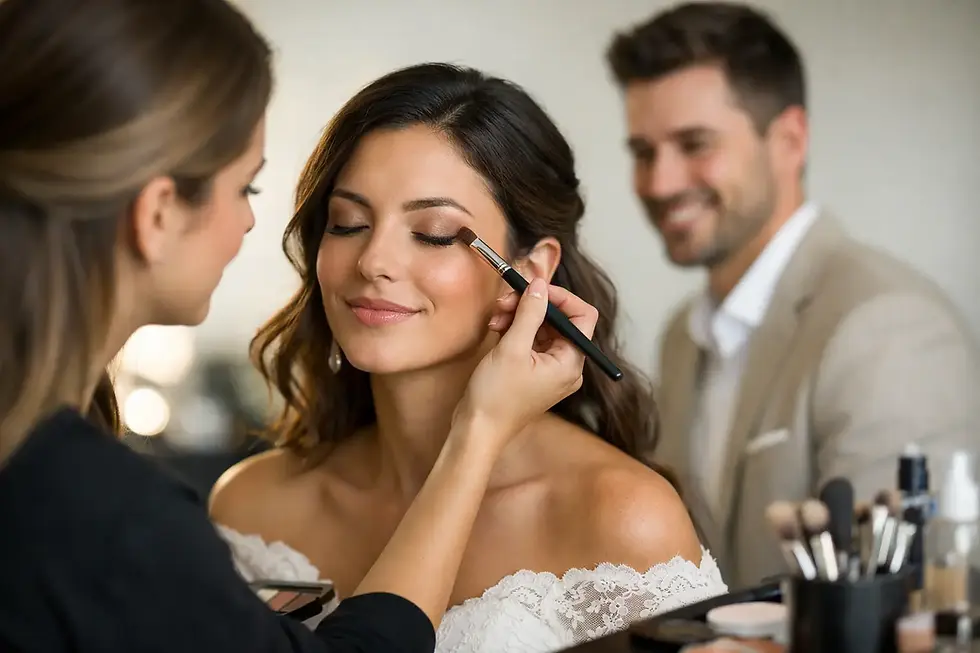
The same natural makeup look does not suit every event. A bridal look needs longevity and emotional comfort. You should be able to see yourself in the mirror and feel confident that it will still look beautiful after the ceremony, portraits, and dancing. A bridal trial is the ideal time to decide how radiant you want the skin, whether you prefer individual lashes or a soft strip lash, and how much contour or lip color feels right.
For engagement photos, the focus may be a little more camera-aware: refined complexion, softly sculpted eyes, and a lip color with enough pigment to register in images. For a birthday dinner or party, natural makeup can be slightly more playful with glossy lips, bronzed skin, or a subtle shimmer on the lids.
Editorial or in-studio photoshoot makeup is where “natural” can become especially nuanced. The makeup may look minimal in the final image, but it is adjusted for the photographer’s lighting, lens, styling, and creative direction. What looks understated on camera often requires precision that is not obvious in person.
How to Prepare for a Natural Makeup Appointment
Your preparation does not need to be complicated. Arrive with a clean face and avoid trying a new active skincare product in the days right before an important event. If you are planning a facial, brow wax, or new treatment, give your skin enough time to settle rather than scheduling it the night before.
Bring reference images, but use them as a starting point rather than a strict formula. It is most helpful to share what you respond to in each image: the luminous skin, soft lashes, warm blush, or lip shape. Mention anything you do not like as clearly as what you do. If you always feel unlike yourself in a bold brow or hate the feeling of sticky gloss, that information helps shape a better final look.
For wedding makeup, wear a top in a similar color to your dress at the trial if possible. A white, ivory, black, or colorful neckline can change how you perceive the balance of your makeup. If you will be wearing a veil, statement earrings, or a dramatic hairstyle, those details can also influence how much definition the face needs.
At makeupnyc, natural looks are approached with the same level of care as full glam: polished enough for the occasion, personal enough to feel right. The final result should complement your dress, your photos, and your plans without becoming the only thing anyone notices.
The best reference for your natural makeup is not a trend report. It is the version of you who feels confident, well-rested, and ready to be seen. Give yourself time for a thoughtful consultation, communicate how you want to feel, and let the finished look support the moment you are there to enjoy.


Comments